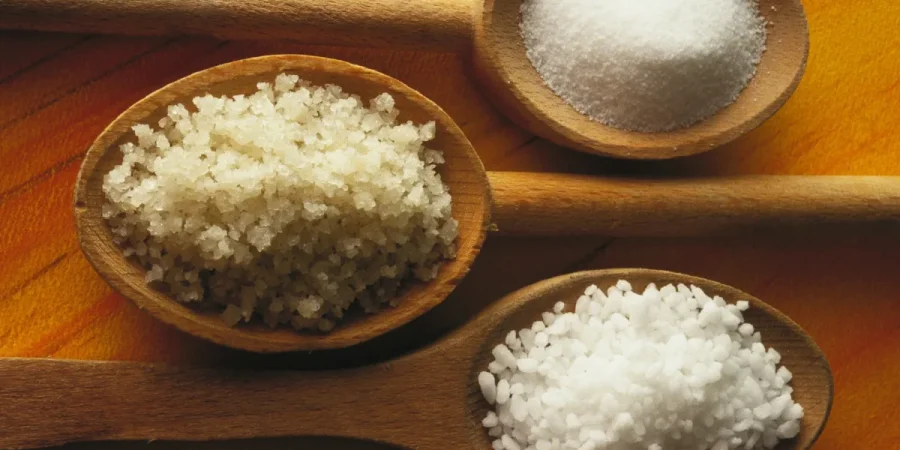
Today, a pack of salt costs pennies. We sprinkle it into soup without thinking, and if we forget to buy it — we just go to the nearest store. But it wasn't always like this. Imagine a world where white powder was valued more than gold. A world where wars started and destinies were broken over a handful of crystals.
This is how the history of salt began.
In ancient times, salt was a real currency. The Latin word salarium (from which "salary" comes) meant "monetary allowance for salt." Roman legionaries were given a special ration — sal dare ("to give salt"). In Africa, a piece of salt could buy a person: slaves were traded for it one-to-one by weight. And in Ethiopia, stone slabs of this mineral circulated as coins as recently as a hundred years ago.
So why did people kill for crystals?
Life without salt is impossible. It regulates water balance and the transmission of nerve impulses. In hot climates, without a preservative, meat rotted within a day. Salt was the only way to preserve food through winter. By controlling its extraction, rulers gained absolute power.
The Venetian Republic demonstrated this most clearly. It monopolized trade and drove prices so high that neighboring countries experienced famine riots. Attempting to smuggle salt resulted in hanging at the city gates. And in 17th-century Russia, the Salt Riot led to the shooting of protesters and the burning of Moscow.
But salt also has a bright side. For centuries, it remained a symbol of purity and protection. To this day, greeting a guest with "bread and salt" means granting them your trust. In the Bible, God calls His covenant the "salt of the earth." And spilling salt still means a quarrel (an echo of ancient times when every crystal was worth its weight in life).
So, the next time you salt your pasta or roast meat — remember. You are holding a substance that fed, healed, killed, and birthed empires. Simply a deity in your salt shaker.
A bit of history
Salt currency in Ethiopia
In Abyssinia (Ethiopia), until the 19th century, salt bars called "amole" served as money. One bar weighing 250 grams could buy a slave or a ram.
The salt kiss in Tibet
In the Middle Ages, Tibetans greeted high-ranking guests with a ritual "salt kiss." The guest licked a piece of salt as a sign of pure intentions and eternal friendship.
The Hanseatic war over salted fish
In the 14th century, the Hanseatic League fought Denmark for the monopoly on herring. Control over salted fish, the main Lenten dish of Europe, cost thousands of lives.
The salt riots in France (gabelle)
The "gabelle" tax on salt was so high that every tenth smuggler was executed. This became one of the sparks of the French Revolution of 1789.
Bread and salt in Rus' as protection
Warring princes who ate bread and salt together declared a truce. Breaking such hospitality was considered a terrible sin, followed by the vengeance of the gods.